Product design of an enterprise application for BIMstream
My role
Lead product designer, UI designer, user researcher
Skills & technologies
Product design, UI design, visual design, design systems, B2B SaaS
Industries
Building Information Modeling (BIM), real estate, construction, architecture, property management
Timeframe
6 weeks
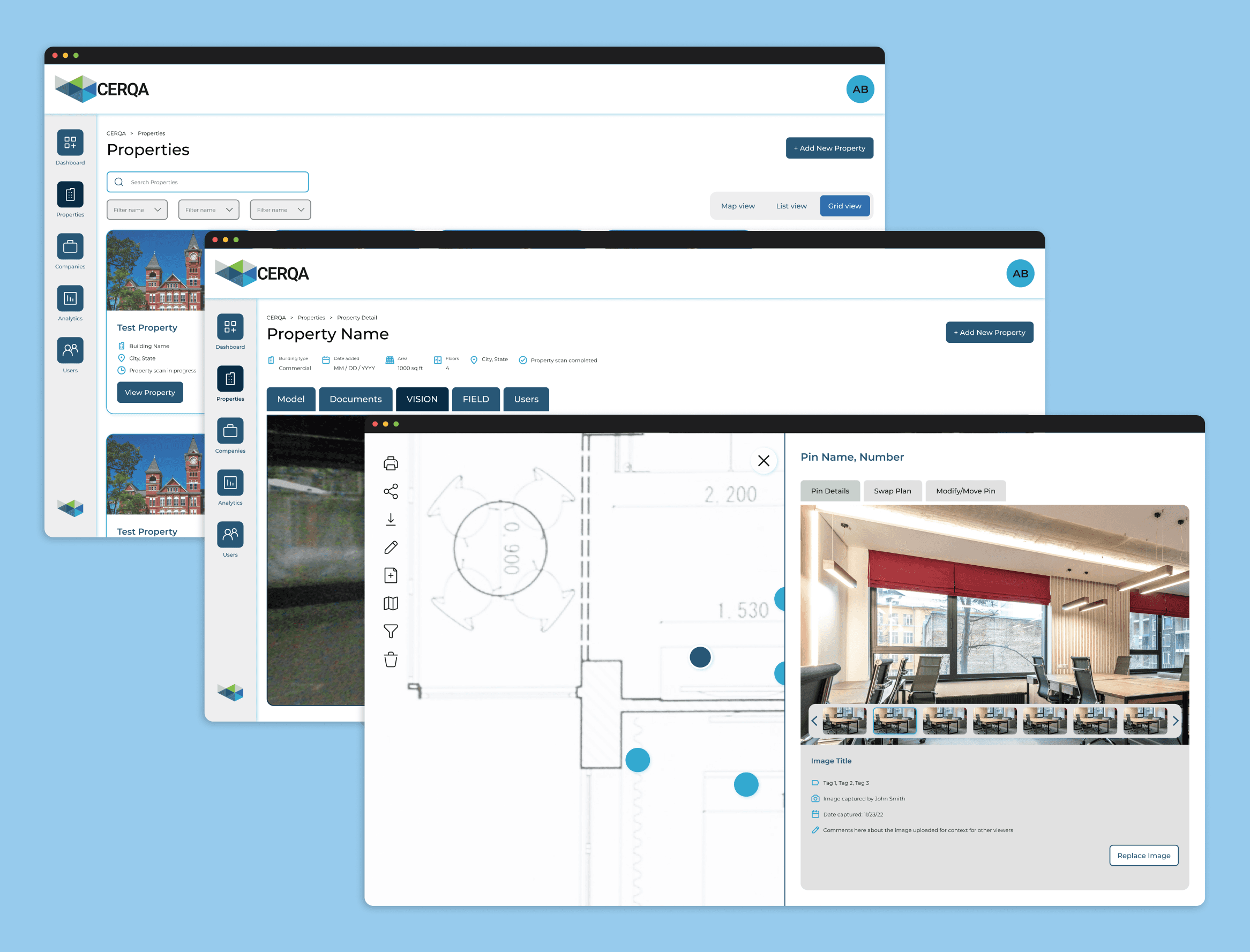
Select final screens for CERQA.
All mockups shown feature placeholders, rather than real client data, to protect privacy.
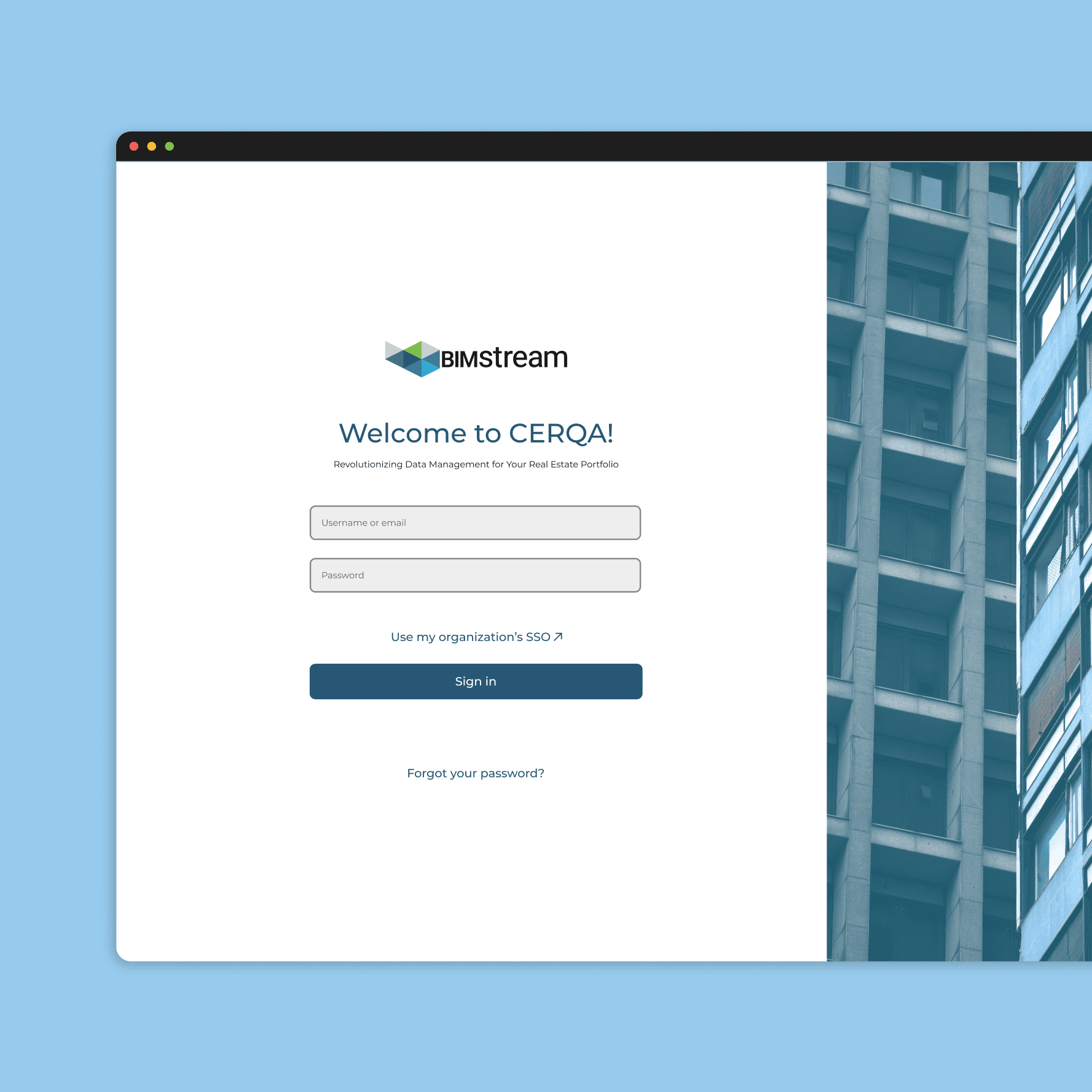
What is CERQA?
CERQA is a cloud platform by BIMstream that centralizes digital twins, 360 imagery, and building documentation into one location for property owners and portfolio managers.
BIMstream performs reality-capture services for a range of clients, turning complex spaces into reliable digital assets.
As lead product designer, I owned the end-to-end redesign of CERQA, reworking an existing product into a cohesive experience with a new design system, refreshed visual identity, and restructured information architecture.
I partnered closely with one engineer and aligned with executive stakeholders throughout to ship a product ready for market over the course of 6 weeks.
Product context
CERQA serves a broad range of users across the building and property industry, including architects, developers, property owners, construction teams, and real estate and property management professionals, as well as BIMstream's own internal teams.
Each group engages with the platform differently, from early-stage design and construction workflows to ongoing portfolio management and operations. This user diversity was a key consideration in the redesign, informing how information is structured across the platform.
Scope
Led UX and UI design for key workflows within the CERQA web application, including user research to uncover core user needs and workflow pain points.
Responsibilities spanned problem definition, stakeholder alignment, interaction design, high-fidelity UI, and a scalable design system.
Constraints
Short timeline tied to a product milestone; fixed launch date with limited iteration cycles, balancing speed with long-term consistency
No comprehensive design system at project start and needed to design for immediate use and future scaling
Predefined technical framework that shaped component and interaction decisions; backend data structures already defined
Small, specialized user base with limited availability for research; reliance on stakeholder-informed insights and qualitative interviews over quantitative data
Defining the problem
Initial ask
Visual redesign of the existing ecosystem (CERQA 1.0)
Bring in some visual polish and standardize the design system
Challenge uncovered
We needed to centralize building data in a convenient way for CERQA's wide range of users
Key assumptions
CERQA is a responsive web application, used on both desktop and tablet
CERQA will continue to adapt and evolve over time as BIMstream receives feedback from their clients, so any design output needs to be scalable
How can we create a centralized platform that allows property owners and portfolio managers to take full advantage of the digital twins, 360 imagery, and building documentation produced by BIMstream in a dynamic, customizable environment?
Design strategy
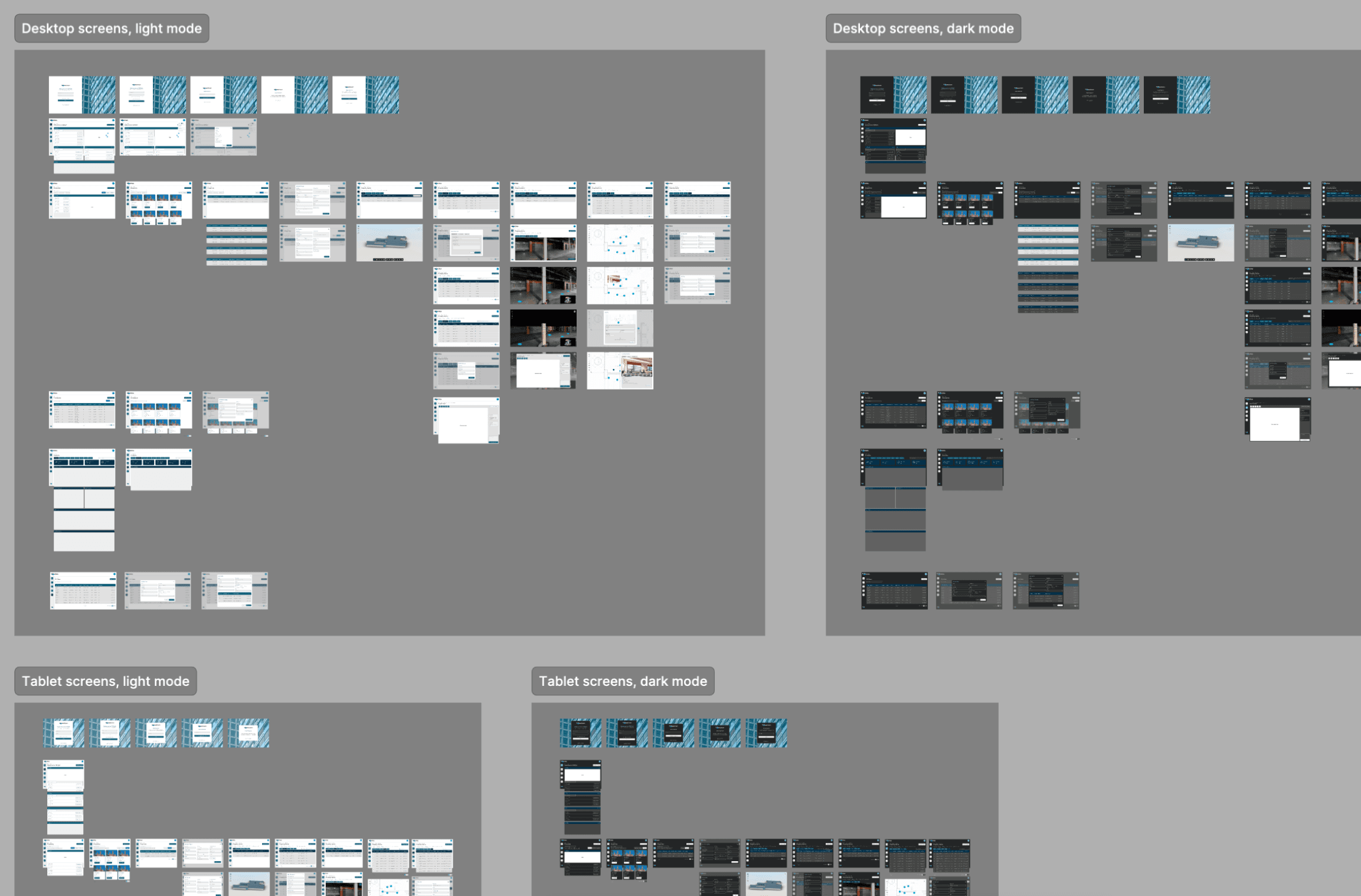
UX approach
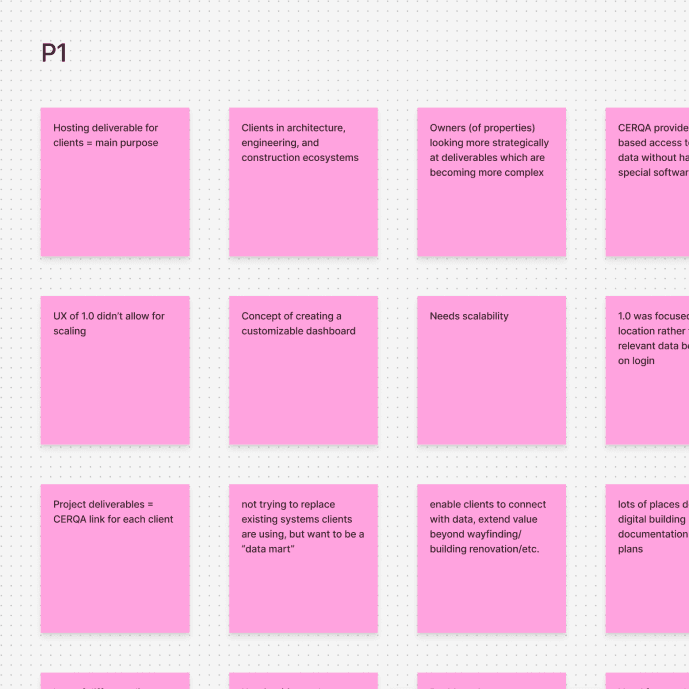
Gathering as much info from expert sources as I could
Semi-structured interviews with stakeholders (who are also users)
Distilling all interview data into key actionable insights about CERQA's many use cases
Working in close partnership with one engineer in a lean, iterative process, moving quickly from concept to build to feedback with executive input at key decision points to maintain strategic alignment
System considerations
Designed around third-party integrations already embedded in client workflows, accounting for systems outside our control
Balanced the needs of multiple distinct user types without fragmenting the experience
Scoped and structured decisions to support a lean, one-engineer build
Delivered within a six-week timeline, requiring tight prioritization and reusable patterns throughout
Visual design principles
Keeping accessibility at the forefront: not just basic standards, but also considering the environment CERQA will be used in (on job sites, on desktop and tablet, in dark and light modes)
I created a couple different style tiles, and after discussion with the BIMstream team, we actually decided to take the best elements of each style direction and combine them into what became the final visual design
Key stakeholders were architects with strong visual skills and attention to detail, so while I was the only designer on the team, this expanded the range of people with visual expertise
Key decisions along the way
Information architecture
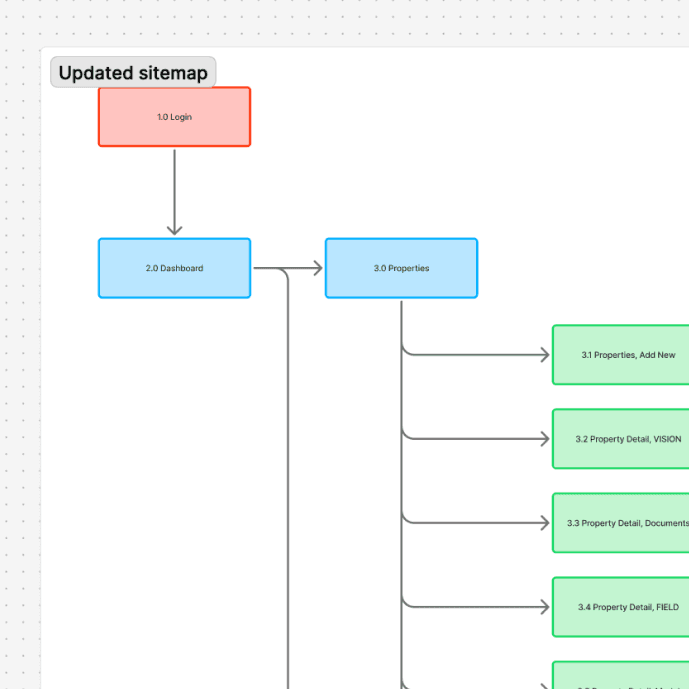
After interviewing a range of users, I chose to centralize all data around each individual property in order to make the wealth of information CERQA offers its users as accessible and easy to navigate as possible
Levels of access
Created multiple ways to view and share data within an organization, so that different roles with different data access permissions can all use CERQA seamlessly
VIsual design & UI unifying multiple modules
Making the UI consistent across all modules (VISION, FIELD, and Documents), even when they perform different functions, was key to helping users understand and navigate the tools
CERQA final design
I led the UX and visual redesign of this enterprise application for BIMstream, centralizing digital twins, 360 imagery, and building documentation into one platform.
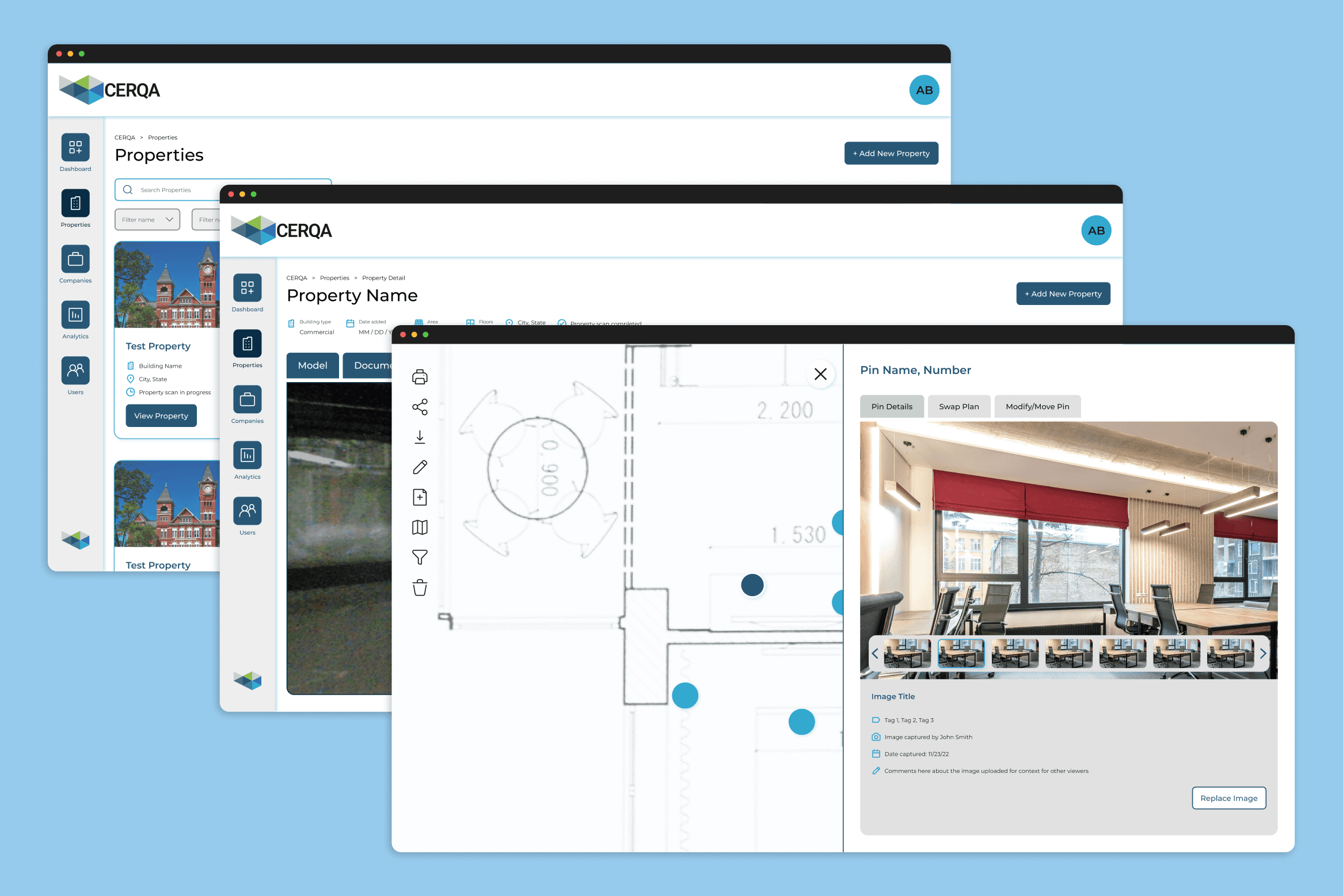
Feature highlight
FIELD
Pin system for site documentation
On-site PDF markup and annotation tools
Mobile-friendly interface for tablets/phones
Site-specific document management
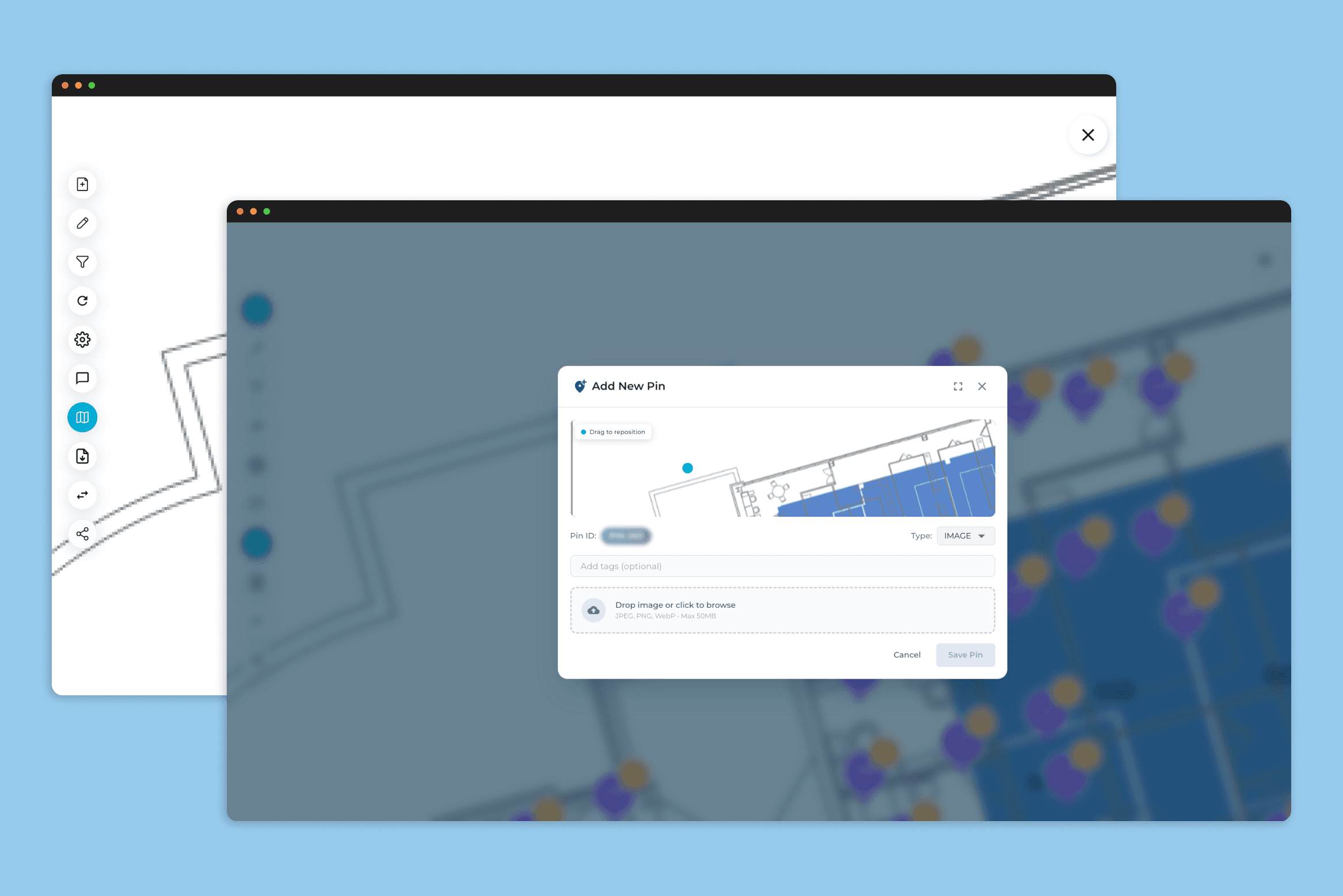
Feature highlight
VISION
Minimal, straightforward UI to enable users to focus on the digital twin imagery and property data
Document access within the 3D image viewer to enable direct interaction with different details of the property model and documentation
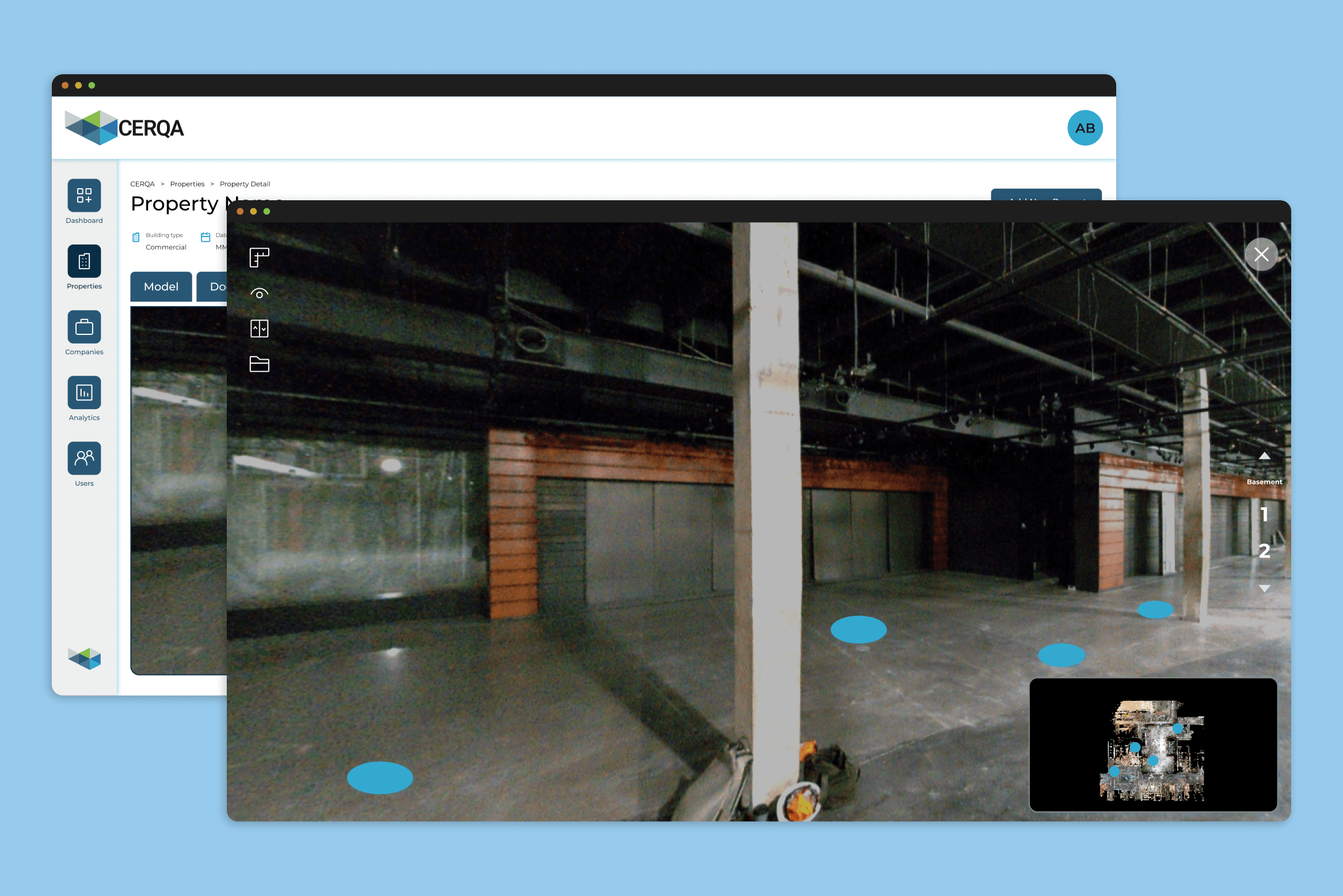
Feature highlight
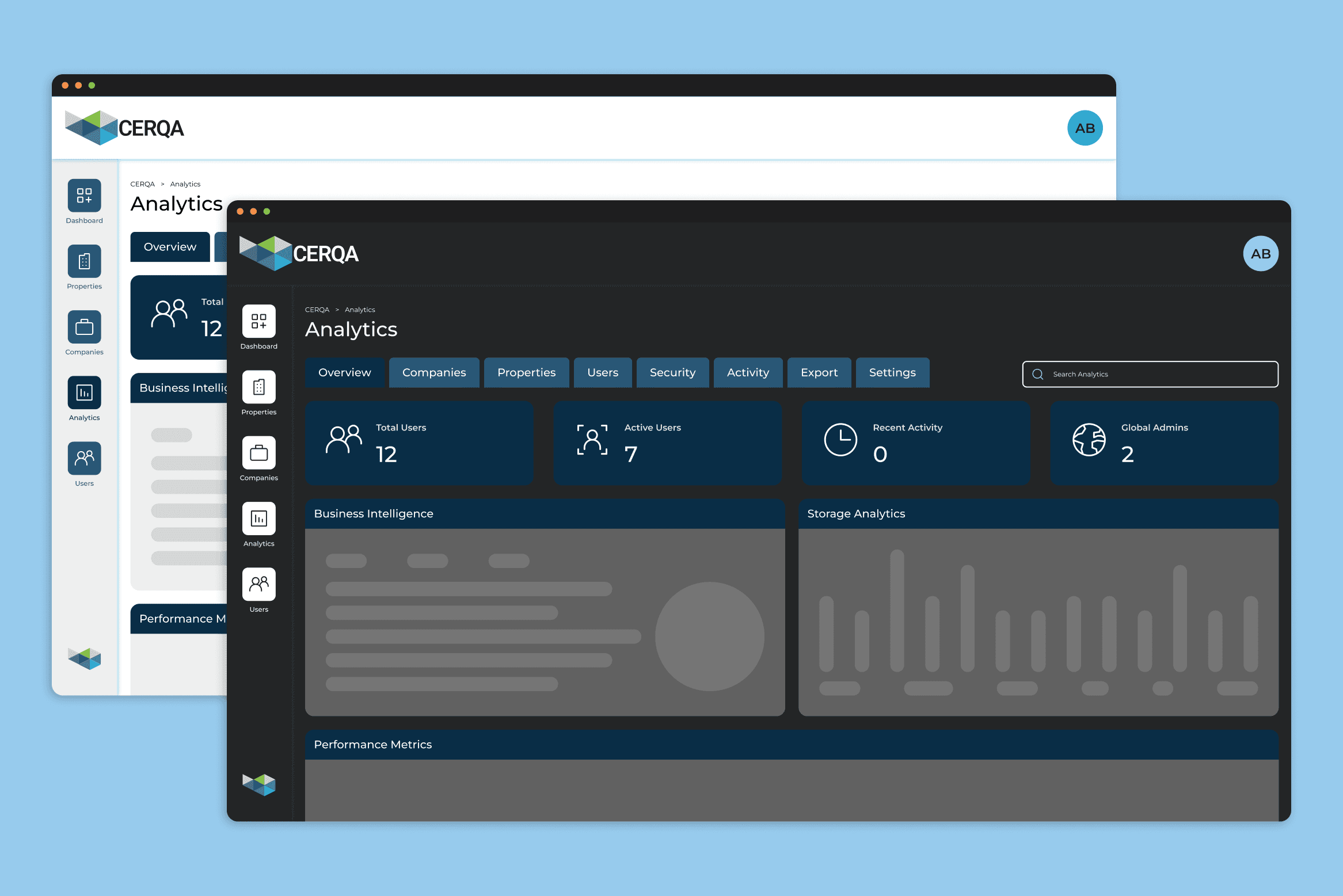
Analytics
Modular, customizable dashboard for any user to focus on the most relevant metrics for their use case
Snapshots of key info in each module to lead users into more in-depth engagement with CERQA
Outcome & impact
My design work enabled BIMstream to develop and launch CERQA in its current form, redesigning an existing product and making it more modern and accessible to their wide range of clients
Modernized the visual design and made it scalable; new capabilities and updates have already been added since I worked on it
Delivered an entirely new and comprehensive design system
6-week project turnaround